Tel: 0129-4001010 Phone: +91 730 321 5033
Email: cs@absoluteveritas.com

Combine Harvester — Test Code IS 8122 (Part 2) : 2026
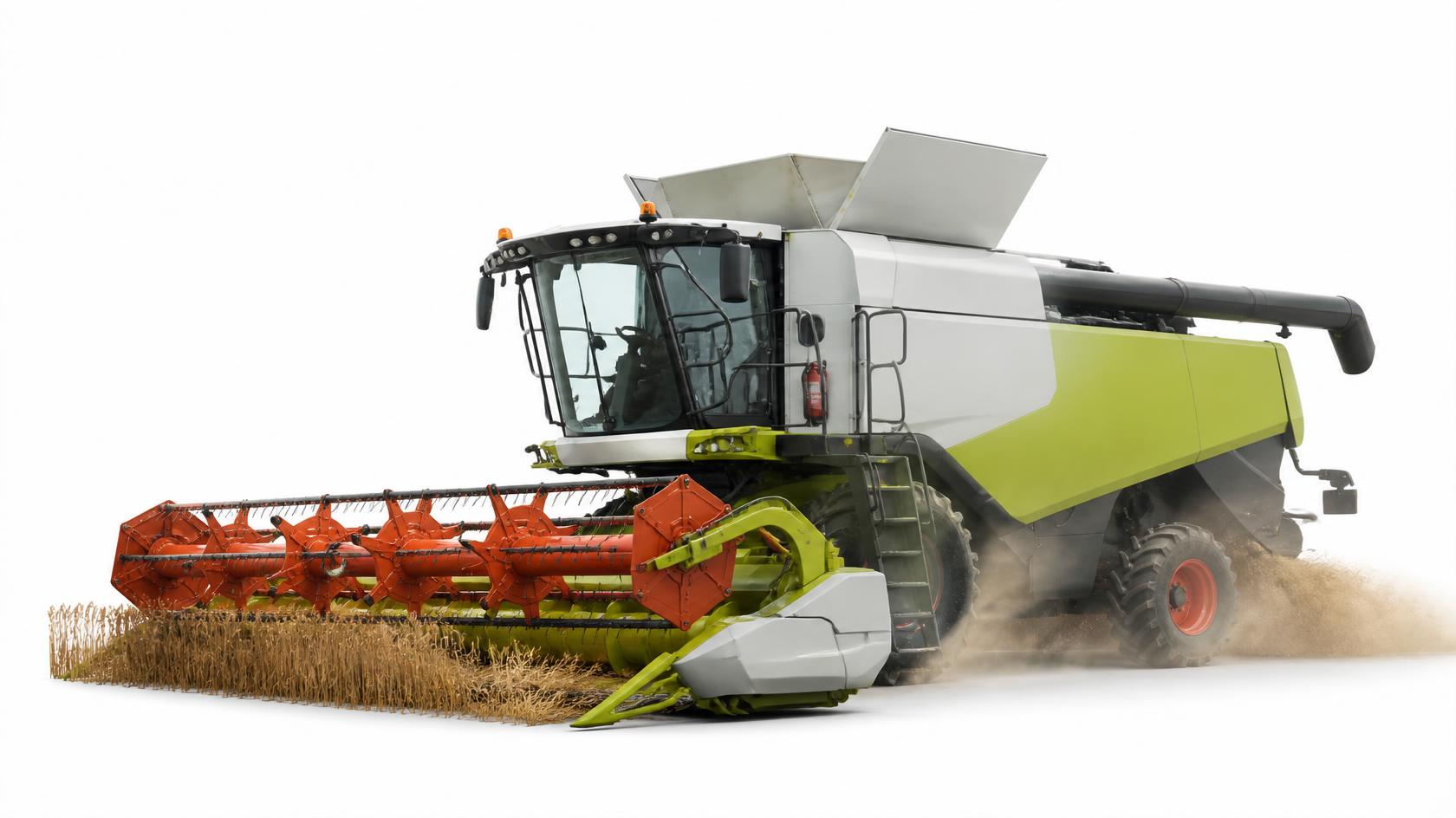
Indian Standards aren't limited to product specifications — many, like IS 8122 (Part 2), define the test procedures that keep performance evaluation consistent across manufacturers and testing agencies.
IS 8122 (Part 2) : 2026 For Combine Harvester — Test Code is the Bureau of Indian Standards' reference for evaluating combine harvester field performance. The Bureau has established this Second Revision on 21 July 2026, replacing IS 8122 (Part 2) : 2000 (Combine-Harvester-Thresher — Test Code, Part 2 Performance Test, First Revision), which will continue to remain valid alongside the new standard until 21 January 2027.
IS 8122 (Part 2) lays down the test procedures used to evaluate combine harvester performance, covering parameters such as field capacity, grain loss, cleaning efficiency, and fuel consumption. These test procedures are referenced by manufacturers and testing agencies alongside Part 1 (Terminology) of the same standard to ensure consistent, comparable performance evaluation.
KEY DETAILS
| Standard Title | Combine Harvester — Test Code |
| Applicable Indian Standard | IS 8122 (Part 2) : 2026 (Second Revision) |
| Standard Type | Test Code (performance testing reference standard) |
| Applicability | Reference standard for manufacturers and testing agencies — not a directly ISI Mark-certifiable product specification |
| Superseded Standard | IS 8122 (Part 2) : 2000 (valid until 21 January 2027) |
Who Uses IS 8122 (Part 2)
This standard is a working reference for:
-
Combine harvester manufacturers: To benchmark field performance and validate machine efficiency claims.
-
Testing agencies: To conduct standardized field trials measuring capacity, losses, and efficiency.
-
IS 8122 (Part 1): Used together with the terminology standard for consistent test reporting.
WHY USE ABSOLUTE VERITAS?
Absolute Veritas is a prominent organisation from the private sector of India primarily dealing with the Inspection, Testing, Audits, Certification of products & consulting services to various industries in India and worldwide, ensuring compliance with regulatory standards and industry requirements. Offering a comprehensive range of services including product certification, testing, training, auditing, and compliance services, Absolute Veritas helps manufacturers and importers stay aligned with current Indian Standards.
For any questions regarding Indian Standards for agricultural machinery, please reach out to us via email at cs@absoluteveritas.com
Frequently asked questions (FAQ)
What does IS 8122 (Part 2) cover?
IS 8122 (Part 2) lays down the test procedures used to evaluate combine harvester performance, covering parameters such as field capacity, grain loss, cleaning efficiency, and fuel consumption.
Which BIS standard governs combine harvester performance testing?
Combine harvester performance testing must follow IS 8122 (Part 2) : 2026, which is used alongside Part 1 (Terminology) to ensure consistent, comparable evaluation.
Who uses IS 8122 (Part 2)?
Manufacturers and testing agencies use IS 8122 (Part 2) as the reference test procedure when evaluating combine harvester field performance and efficiency.
Does a manufacturer need BIS certification under this standard?
No. IS 8122 (Part 2) is a test code standard, not a product specification, so there is no ISI Mark certification issued directly against it.
Is the previous IS 8122 (Part 2) : 2000 standard still valid?
IS 8122 (Part 2) : 2026 was established on 21 July 2026. The earlier IS 8122 (Part 2) : 2000 continues to remain in force alongside it until 21 January 2027, after which it stands withdrawn.
BIS BLOGS
.png)
Guide to BIS CRS Registration for Products in India
The Bureau of Indian Standards (BIS) and its Compulsory Registration Scheme (CRS) play a vital role in ensuring the quality...
Read More.png)
BIS Registration Renewal: A Complete Guide
The BIS CRS (Bureau of Indian Standards/Compulsory Registration Scheme) outlines mandatory requirements for both domestic...
Read More
BIS CRS Labelling Guidelines
Under the BIS-CRS Labelling Scheme, which currently covers 78 mandatory product categories, all products must receive...
Read More%20Compliance%20Needed%20for%20Analog%20CCTV%20Cameras.png)
No Essential Requirement Compliance Needed for Analog CCTV Cameras
As per recent notification dated 12th March 2025, the Ministry of Electronics and Information Technology (MeitY) has...
Read More
Updated BIS Implementation Guidelines for IS 61683 Standard
The Bureau of Indian Standards (BIS) has released revised implementation guidelines for IS 61683, the Indian Standard...
Read More
BIS Implements IS 16270 for Solar PV Batteries
The Bureau of Indian Standards (BIS) has released updated implementation guidelines for IS 16270:2023, a crucial standard...
Read More
Share this Post
 LinkedIn
  WhatsApp
  Facebook
 CONTACT US




 ❮
❮