Tel: 0129-4001010 Phone: +91 730 321 5033
Email: cs@absoluteveritas.com

BIS Certification For Ferro Vanadium IS 1466:1985
In today's competitive landscape, maintaining market presence without a certified, high-quality product can be challenging. Obtaining a BIS license may also be essential for selling products in the Indian market. To achieve BIS certification and ensure product quality, manufacturers must adhere to the specified Indian standards.
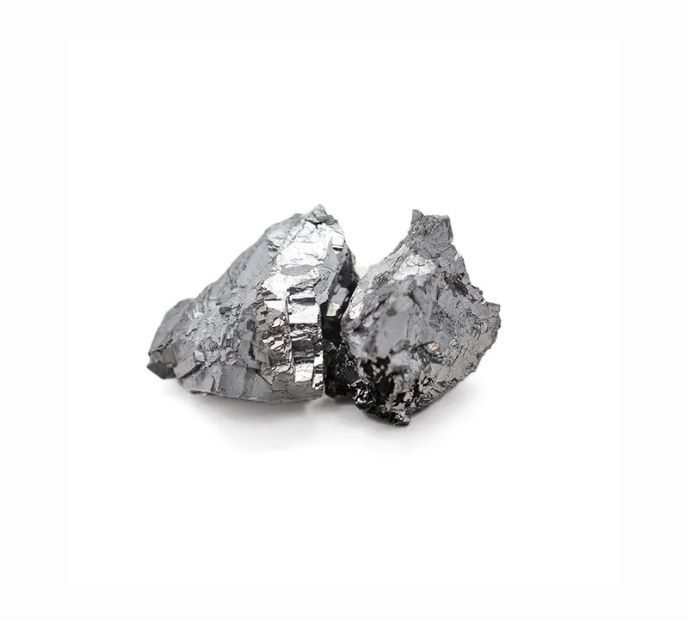
Let's delve deeper into IS 1466:1985 For Ferro Vanadium. Ferro vanadium is defined as an iron-vanadium alloy used mainly as a vanadium additive in alloy steels, and the standard includes two primary grades — low carbon and foundry — each with distinct subgrades based on vanadium content.
Ferro vanadium is widely used in the manufacture of high-strength steel, improving strength, toughness, and wear resistance, with applications spanning automotive, machinery, and other durable products. The standard specifies precise limits for vanadium, silicon, carbon, sulfur, phosphorus, aluminum, and manganese, and sets maximum percentages for residual elements like chromium, copper, nickel, and molybdenum to ensure alloy quality. Guidelines also cover nominal particle sizes for lump or crushed forms, including tolerances for undersized and oversized particles, and the standard requires the alloy be free from significant extraneous contaminants. Because vanadium content directly affects the tensile strength and wear resistance of the finished steel, consistent compliance with this standard matters across the steelmaking, engineering, and heavy machinery sectors that rely on this alloying input.
KEY HIGHLIGHTS
| Product Name | Ferro Vanadium |
| Applicable Indian Standard | IS 1466:1985 |
| Applicable Certification Scheme | Product Certification Scheme (ISI Mark Scheme) Scheme 1 - Schedule 2 |
| Compliance Requirement | Mandatory |
| QCO Link | Quality Control Order |
Tests
Mandatory Tests:
-
Chemical Composition Analysis (Vanadium, Silicon, Carbon, Sulfur, Phosphorus, Aluminum, Manganese)
-
Residual Element Limit Testing (Chromium, Copper, Nickel, Molybdenum)
-
Particle Size and Tolerance Check
-
Contamination/Extraneous Material Inspection
-
Sampling and Chemical Analysis
Optional Tests:
-
Lump/Crushed Form Grading
-
Moisture Content Test
Also Read: Foreign Manufacturer certification Services
Benefits of Obtaining ISI Mark for Ferro Vanadium
Here are the key benefits of getting ISI Mark certification:
-
Government Quality Assurance: The ISI mark confirms the alloy complies with the chemical and quality benchmarks set by BIS for ferro vanadium.
-
Mandatory Compliance: Every consignment must carry the Standard Mark under a valid BIS license, with compliance to IS 1466:1985 compulsory and a BIS Test Certificate required for each consignment; non-conforming material must be scrapped per BIS Act provisions.
-
Improved Steel Quality: Certification supports consistent alloying, which helps steel producers achieve the strength, durability, and wear resistance their products depend on.
-
Enhanced Market Reputation: Certified suppliers gain a stronger reputation with steel producers and alloy buyers who specifically look for BIS-compliant input materials.
-
Regulatory Alignment: The order is issued under Sections 16, 17, and 25(3) of the BIS Act, 2016, with non-compliance attracting penalties under Section 29 — certification keeps manufacturers clear of this exposure.
PROCESS FOR BIS ISI MARK CERTIFICATION
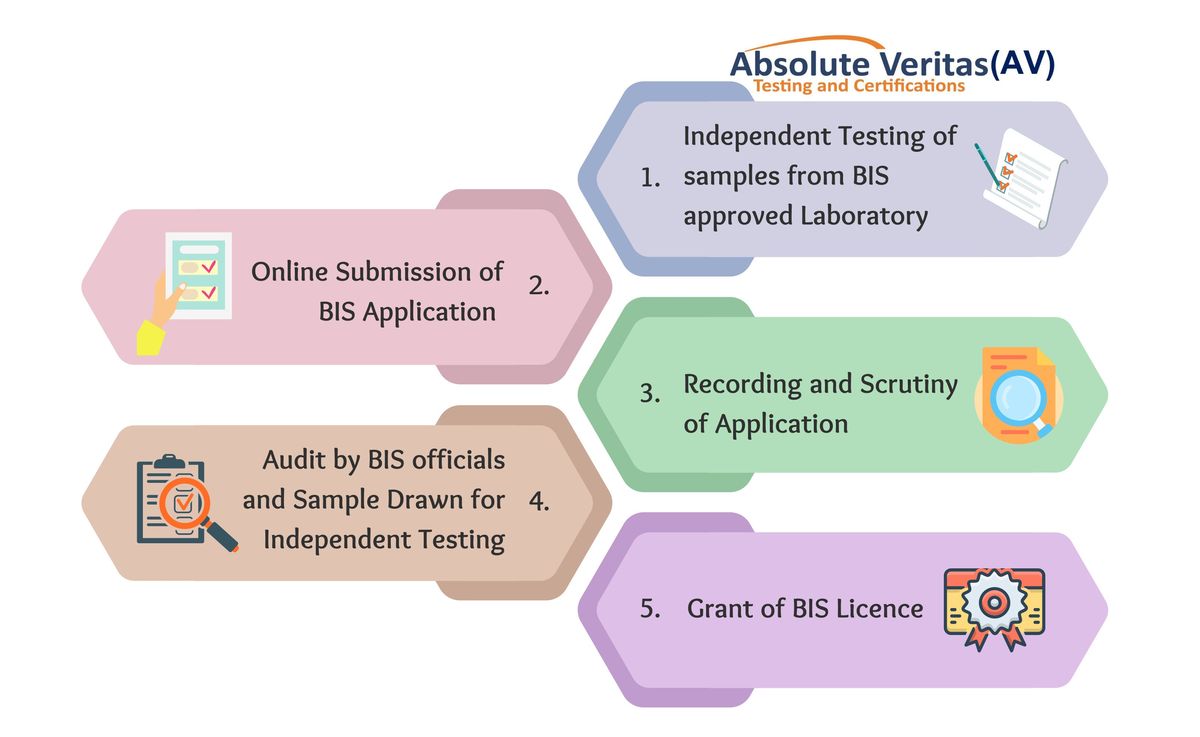
BIS Certification Timeline for Ferro Vanadium
The estimated duration for securing BIS certification for ferro vanadium under IS 1466:1985 varies based on the manufacturer’s location and certification route. The typical timelines are outlined below:
| Indian Manufacturers | BIS certification is generally completed within approximately 30 days, subject to successful product testing and documentation verification. |
| Foreign Manufacturers (FMCS Route) | Under the BIS Foreign Manufacturer Certification Scheme (FMCS), the process usually takes around 180 days, considering factory inspection, sample testing, and regulatory approvals. |
BIS CERTIFICATION PROCESS
Acquiring a BIS license for ferro vanadium involves a detailed review of the manufacturer's production process, in-house quality control capability, testing infrastructure, and documentation. BIS officials inspect the manufacturing plant for process and quality control systems before granting the license to affix the ISI mark.
NOTE:
For comprehensive guidance on the BIS ISI Certification process, please explore:
WHY USE ABSOLUTE VERITAS?
Absolute Veritas is a prominent organisation from the private sector of India primarily dealing with the Inspection, Testing, Audits, Certification of products& consulting services to various industries in India and worldwide, ensuring compliance with regulatory standards and industry requirements. Offering a comprehensive range of services including product certification, testing, training, auditing, and compliance services, Absolute Veritas helps manufacturers and importers achieve higher production efficiency and quality standards.
Absolute Veritas (BIS Consultant) will handle end to end pre-registration request, sample preparation, documentation, testing and application process for ISI Mark Certification
For any questions regarding the most recent update on ISI Mark registration licenses, please reach out to us via email at cs@absoluteveritas.com
Frequently asked questions (FAQ)
What is Ferro Vanadium used for?
It's used as an alloying element to improve the strength, toughness, and wear resistance of high-strength steel, used across automotive, machinery, and other durable-goods manufacturing.
Is BIS certification mandatory for Ferro Vanadium?
Yes — compliance with IS 1466:1985 is compulsory, and this applies to ferro vanadium produced domestically or imported for use in steel-making and alloy production.
What grades does IS 1466:1985 cover?
Two primary grades — low carbon and foundry — each with subgrades based on vanadium content.
What does each consignment need to carry?
Every consignment must conform to IS 1466:1985 and be accompanied by a Test Certificate bearing the Standard Mark issued by a BIS-certified manufacturer.
What happens to non-conforming material?
Non-conforming material must be scrapped per BIS Act provisions.
BIS BLOGS
.png)
Guide to BIS CRS Registration for Products in India
The Bureau of Indian Standards (BIS) and its Compulsory Registration Scheme (CRS) play a vital role in ensuring the quality...
Read More.png)
BIS Registration Renewal: A Complete Guide
The BIS CRS (Bureau of Indian Standards/Compulsory Registration Scheme) outlines mandatory requirements for both domestic...
Read More
BIS CRS Labelling Guidelines
Under the BIS-CRS Labelling Scheme, which currently covers 78 mandatory product categories, all products must receive...
Read More%20Compliance%20Needed%20for%20Analog%20CCTV%20Cameras.png)
No Essential Requirement Compliance Needed for Analog CCTV Cameras
As per recent notification dated 12th March 2025, the Ministry of Electronics and Information Technology (MeitY) has...
Read More
Updated BIS Implementation Guidelines for IS 61683 Standard
The Bureau of Indian Standards (BIS) has released revised implementation guidelines for IS 61683, the Indian Standard...
Read More
BIS Implements IS 16270 for Solar PV Batteries
The Bureau of Indian Standards (BIS) has released updated implementation guidelines for IS 16270:2023, a crucial standard...
Read More
Share this Post
 LinkedIn
  WhatsApp
  Facebook
 CONTACT US




 ❮
❮