Tel: 0129-4001010 Phone: +91 730 321 5033
Email: cs@absoluteveritas.com

BIS Certification For Flashlight IS 2083:2024
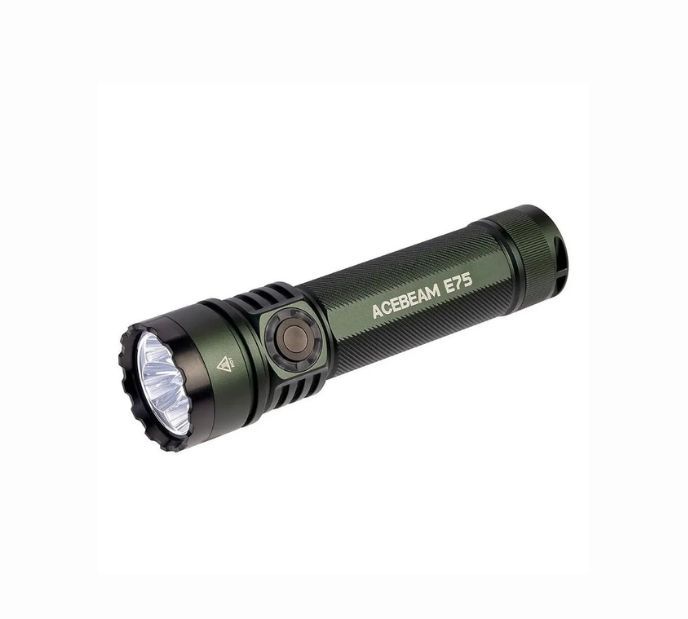
In today's competitive landscape, maintaining market presence without a certified, high-quality product can be challenging. Obtaining a BIS license may also be essential for selling products in the Indian market. To achieve BIS certification and ensure product quality, manufacturers must adhere to the specified Indian standards.
Let's delve deeper into IS 2083:2024 For Flashlight. This is the third revision of the Indian Standard for flashlights, replacing IS 2083:1991, issued by the Electrotechnical Department under the Primary Cells and Batteries Sectional Committee. This standard specifies the requirements and tests for flashlights powered by replaceable primary batteries and replaceable/built-in secondary batteries with a maximum voltage of 48 V d.c., applicable to both pre-focused and focusing-type flashlights with incandescent bulb or LED module as the light source.
Flashlights are a common yet critical safety and utility product used in households, industrial settings, emergency kits, and defense, which is why ensuring their quality, durability, and user safety carries real weight. The standard's testing scope includes construction checks, drop test, climatic endurance, light distribution, lumen depreciation, overcharge protection, ingress protection, and thermal testing, alongside performance benchmarks such as a minimum efficacy of 100 lm/W, lumen maintenance of 85% or more after 2000 hours, and a Colour Rendering Index of 70 or higher. Cord and plug connected handlamps, emergency lighting, and flashlights intended for hazardous locations fall outside the scope of this standard.
KEY HIGHLIGHTS
| Product Name | Flashlight |
| Applicable Indian Standard | IS 2083:2024 |
| Applicable Certification Scheme | Product Certification Scheme (ISI Mark Scheme) Scheme 1 - Schedule 2 |
| Compliance Requirement | Mandatory |
| QCO Link | Quality Control Order |
Tests
Mandatory Tests:
-
Construction and Build Quality Check
-
Drop Test
-
Climatic Endurance Test
-
Light Distribution and Lumen Output Test
-
Lumen Depreciation/Maintenance Test
-
Overcharge Protection Test (Rechargeable Models)
-
Thermal Safety Test
Optional Tests:
-
Ingress Protection Test
-
Colour Rendering Index (CRI) Assessment
Also Read: Foreign Manufacturer certification Services
Benefits of Obtaining ISI Mark for Flashlight
Here are the key benefits of getting ISI Mark certification:
-
Government Quality Assurance: The ISI mark proves that a flashlight has passed the required safety and quality tests in a BIS-approved lab.
-
Mandatory Compliance: Under the Flashlight (Quality Control) Order, 2025, all flashlights must conform to IS 2083:2024 and bear the Standard Mark, granted under a license from BIS.
-
Enhanced Market Competitiveness: Certification is especially critical for brands targeting government tenders, e-commerce platforms, defense supplies, and bulk buyers, who require ISI compliance as a baseline.
-
Consumer Trust: For flashlights, the ISI mark ensures proper brightness, battery life, durability, and safe design.
-
Avoiding Legal Exposure: Non-compliance can lead to product seizures, fines, and legal penalties under the BIS Act, with only ISI-marked flashlights legally permitted for sale in the Indian market.
PROCESS FOR BIS ISI MARK CERTIFICATION
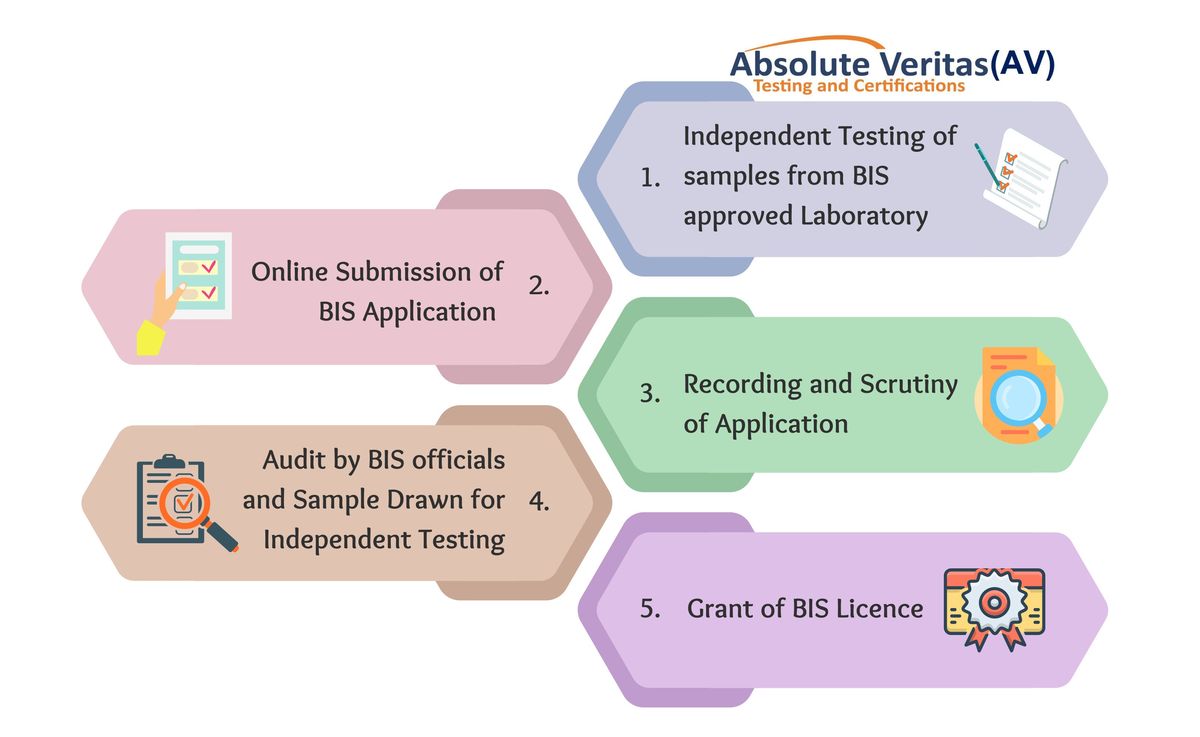
BIS Certification Timeline for Flashlight
The estimated duration for securing BIS certification for flashlights under IS 2083:2024 varies based on the manufacturer’s location and certification route. The typical timelines are outlined below:
| Indian Manufacturers | BIS certification is generally completed within approximately 30 days, subject to successful product testing and documentation verification. |
| Foreign Manufacturers (FMCS Route) | Under the BIS Foreign Manufacturer Certification Scheme (FMCS), the process usually takes around 180 days, considering factory inspection, sample testing, and regulatory approvals. |
BIS CERTIFICATION PROCESS
Acquiring a BIS license for this product involves submitting an application form along with required documentation, a documentation review by BIS, and an on-site factory inspection to assess the production process and quality control measures. Product samples are then tested for compliance with IS 2083:2024 in a BIS-recognized laboratory, which issues a test report claiming conformity to the standard, before BIS grants the license to affix the Standard Mark on the product and its packaging.
NOTE:
For comprehensive guidance on the BIS ISI Certification process, please explore:
WHY USE ABSOLUTE VERITAS?
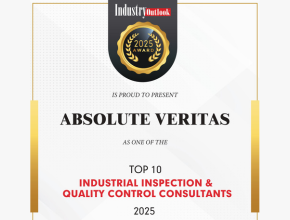
Absolute Veritas is a prominent organisation from the private sector of India primarily dealing with the Inspection, Testing, Audits, Certification of products& consulting services to various industries in India and worldwide, ensuring compliance with regulatory standards and industry requirements. Offering a comprehensive range of services including product certification, testing, training, auditing, and compliance services, Absolute Veritas helps manufacturers and importers achieve higher production efficiency and quality standards.
Absolute Veritas (BIS Consultant) will handle end to end pre-registration request, sample preparation, documentation, testing and application process for ISI Mark Certification
For any questions regarding the most recent update on ISI Mark registration licenses, please reach out to us via email at cs@absoluteveritas.com
Frequently asked questions (FAQ)
What products fall under IS 2083:2024?
Flashlights for general use, including battery-operated torches, LED flashlights, handheld lights, and rechargeable models.
Is BIS certification mandatory for flashlights?
Yes — under the Flashlight (Quality Control) Order, 2025, all flashlights must conform to IS 2083:2024 and bear the Standard Mark granted under a BIS license.
Are exported flashlights exempt from this requirement?
Yes — flashlights manufactured in India for export purposes are exempt from the order.
What R&D exemption applies under this QCO?
Manufacturers may import up to fifty flashlights per year for research and development; these products cannot be sold commercially and must be disposed of as scrap, with a record of imported goods maintained.
How long does certification typically take?
Approximately 30 days for Indian manufacturers and around 180 days for foreign manufacturers.
BIS BLOGS
.png)
Guide to BIS CRS Registration for Products in India
The Bureau of Indian Standards (BIS) and its Compulsory Registration Scheme (CRS) play a vital role in ensuring the quality...
Read More.png)
BIS Registration Renewal: A Complete Guide
The BIS CRS (Bureau of Indian Standards/Compulsory Registration Scheme) outlines mandatory requirements for both domestic...
Read More
BIS CRS Labelling Guidelines
Under the BIS-CRS Labelling Scheme, which currently covers 78 mandatory product categories, all products must receive...
Read More%20Compliance%20Needed%20for%20Analog%20CCTV%20Cameras.png)
No Essential Requirement Compliance Needed for Analog CCTV Cameras
As per recent notification dated 12th March 2025, the Ministry of Electronics and Information Technology (MeitY) has...
Read More
Updated BIS Implementation Guidelines for IS 61683 Standard
The Bureau of Indian Standards (BIS) has released revised implementation guidelines for IS 61683, the Indian Standard...
Read More
BIS Implements IS 16270 for Solar PV Batteries
The Bureau of Indian Standards (BIS) has released updated implementation guidelines for IS 16270:2023, a crucial standard...
Read More
Share this Post
 LinkedIn
  WhatsApp
  Facebook
 CONTACT US

 ❮
❮